Multimedia Story Final
Walking Into UVic: A Multimedia Campus Story
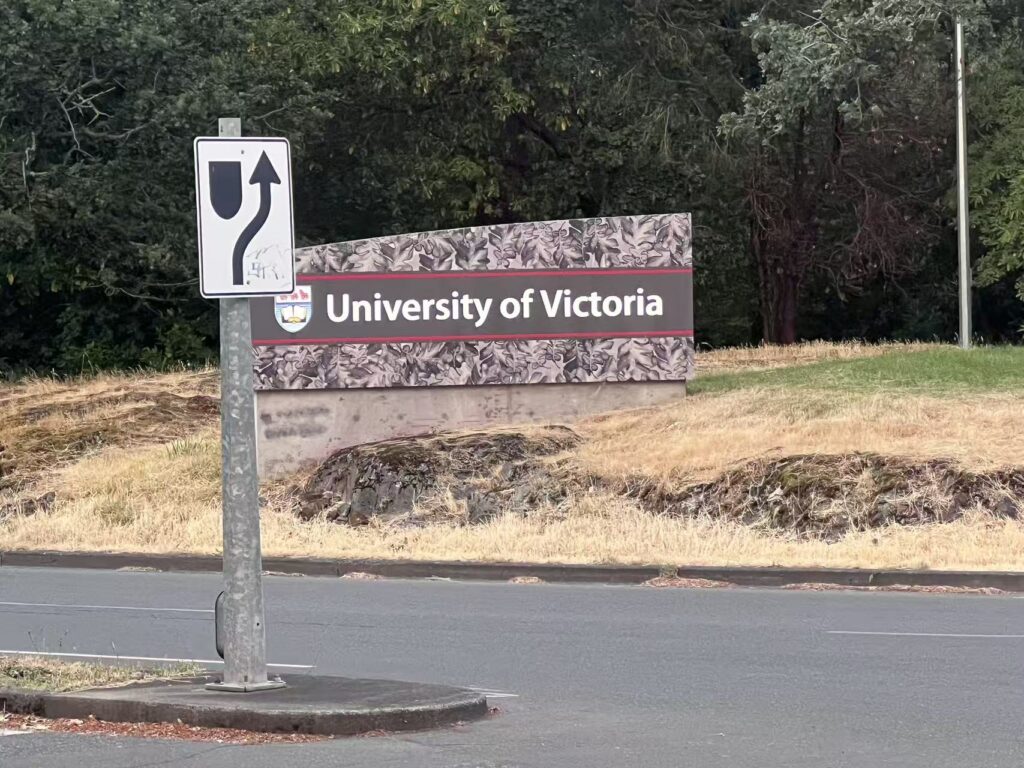
Introduction
This last multimedia story is my walking through the University of Victoria. I began by working in various areas of campus, such as in the natural environment, walking paths, academic facilities and student community spaces, near Finerty Gardens。 Instead of making this story feel like an official campus tour, I hope to give people a tour of the UVic campus from a personal perspective.
My initial idea was to write about a single building, but I realized that one building cannot represent the entire university. This is because the University of Victoria is made up of many different parts, including classrooms, buildings, gardens, trees, walking paths, study spaces, student services, and the natural environment surrounding the campus.
My Adventure and Walking Route
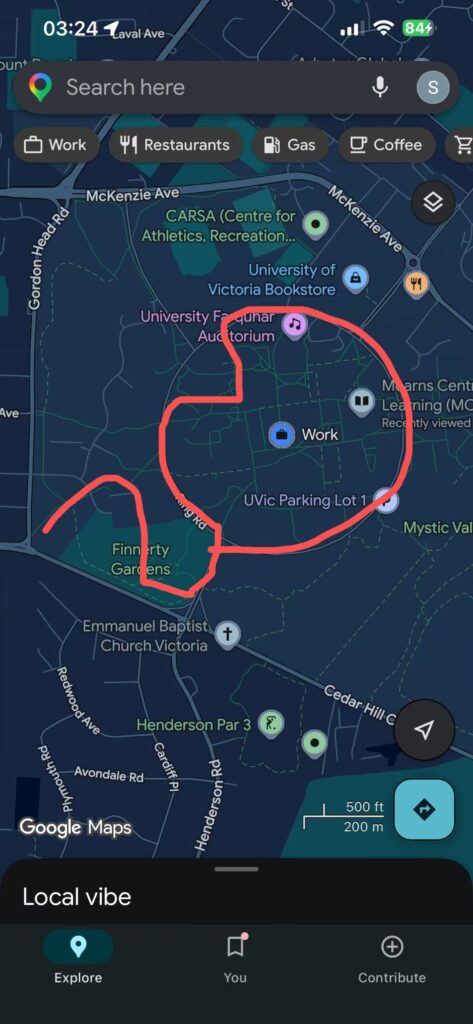
For this project, my exploration involved walking around the University of Victoria campus. I walked all over the campus, taking photos, recording ambient sounds, and thinking about the role each location might play in the story. To keep the route simple and easy to follow, I started at Finerty Gardens and then headed to the main campus area.
I also provide a route map to help viewers understand the location of the walking route. The map serves as a guide to orient viewers before delving into the details of each site. I believe this relates to the “Principle of Signaling,” as the map gives viewers a sense of the entire journey, making it easier for them to follow the story as it unfolds.
Stop 1: Finerty Gardens — A Natural Beginning
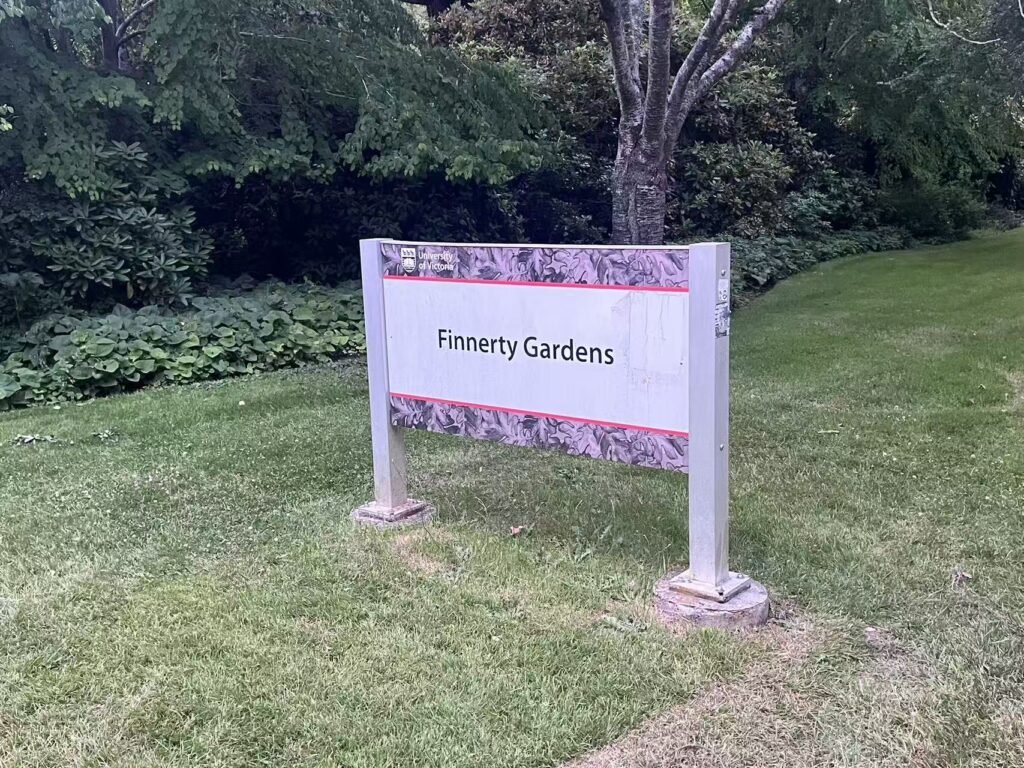
Let’s start with Finerty garden, a peaceful and natural beginning to our story. Before entering the main campus, this area is less crowded and much quieter. The University of Victoria is not only a place for attending lectures, classes, and studying, but also offers an environment that helps reduce student stress. In addition, many local residents choose to bring their children here to play.
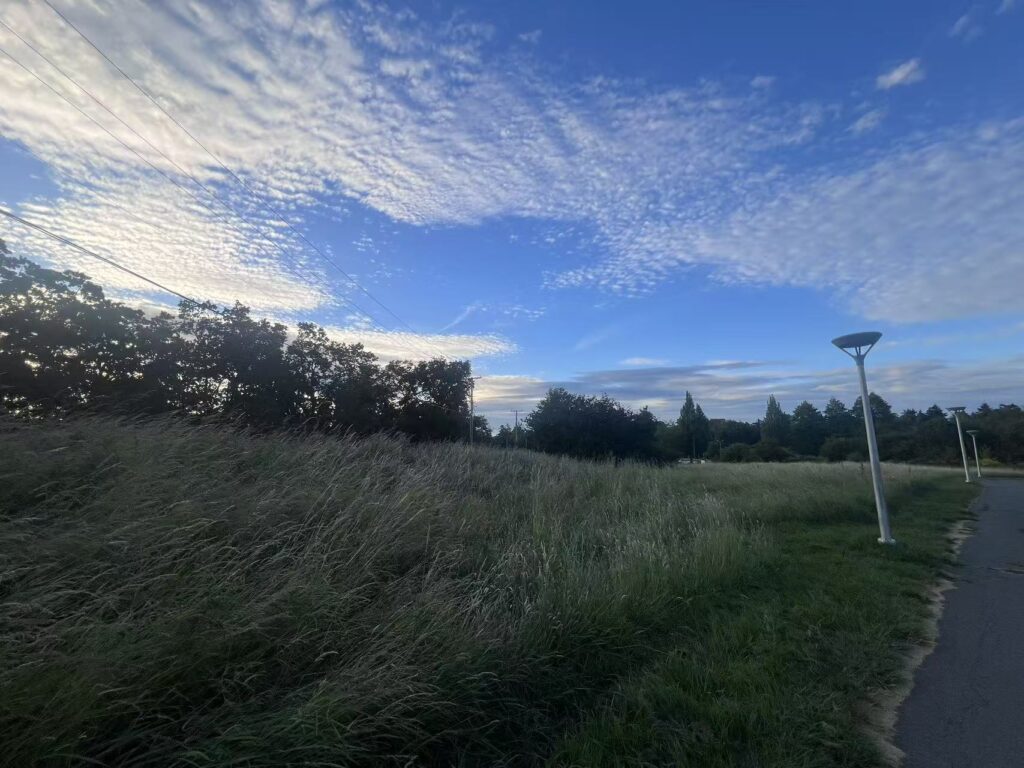
This part of my walk also made me realize more deeply that the learning environment isn’t limited to the four walls of a building. Gardens, trees, paths, and open spaces can all influence the learning experience. I often see students studying on benches; they seem to prefer the feel of nature over the library. I highly recommend taking a short break here after studying, or using this space to relax.
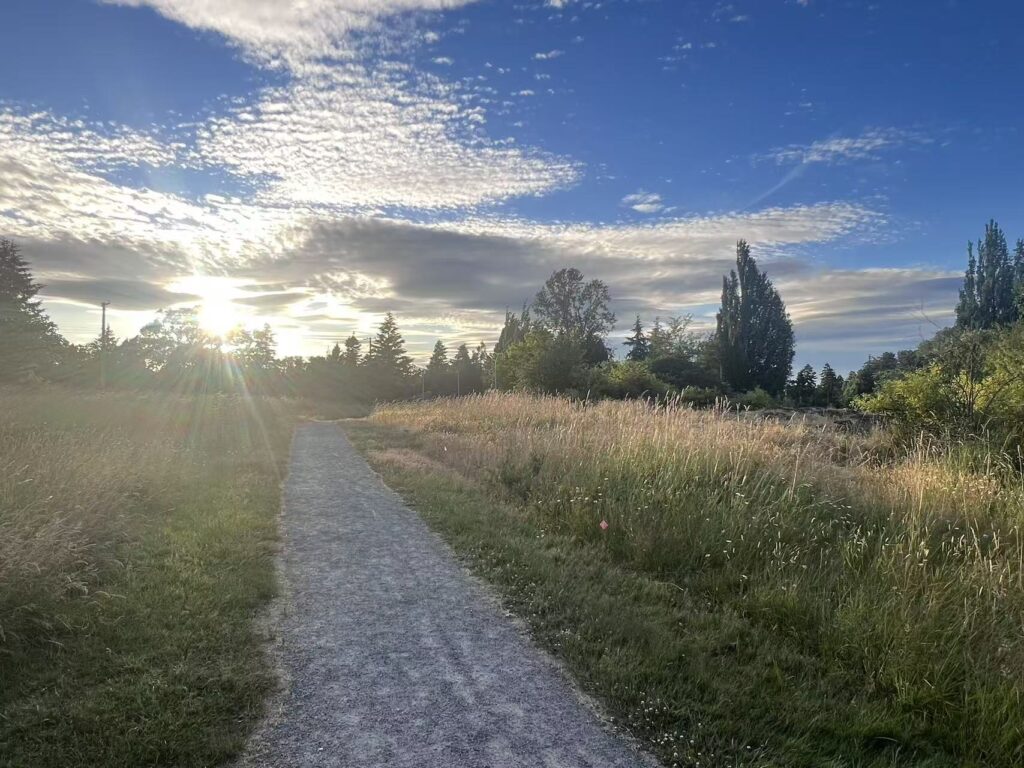
I’ve included a photo of Finerty Garden here because it gives people a better, more intuitive sense of the setting’s beauty and serene atmosphere. I’m trying to apply the principle of coherence. Because I didn’t want to include every photo I took, as that might distract readers and disrupt the flow of the story.
Audio, bird(link)
Stop 2: Nature on Campus — Walking and Noticing
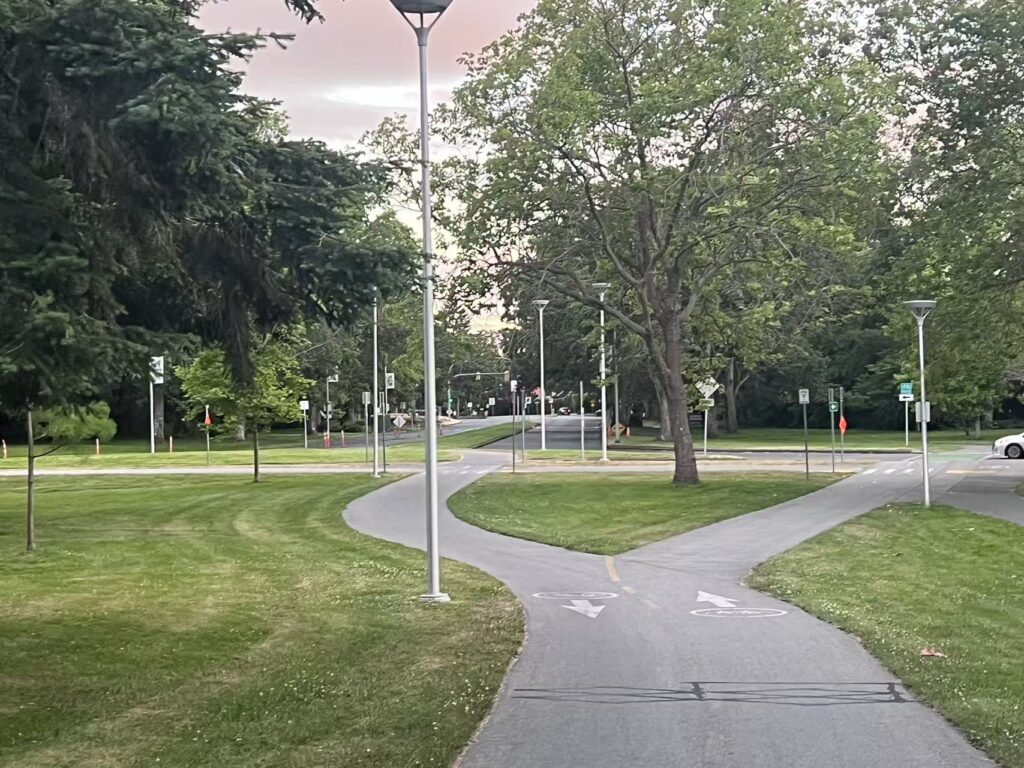
Audio, Footsteps(link)
When I stepped out of Finati Gardens, I strolled along the campus paths and truly felt the campus brimming with the spirit of nature. Thanks to the trees, lawns, wide paths, and herds of deer, the campus atmosphere is more relaxed and pleasant than that of a typical urban environment, giving it a unique character. This proves that the University of Victoria is more than just a campus. To put it metaphorically, it’s more like a haven within a bustling city, where students can socialize, unwind, and enjoy life between classes.
To help people better understand, I’ve included images and audio elements. The photos capture the atmosphere of the physical setting, while the audio further enhances that atmosphere. Footsteps and outdoor sounds make it feel as though the story is actually taking place right here, rather than just being a series of static images. This also assoicate with the strengths of different media. The images convey a sense of place, audio creates atmosphere, and text explains why that place is important.
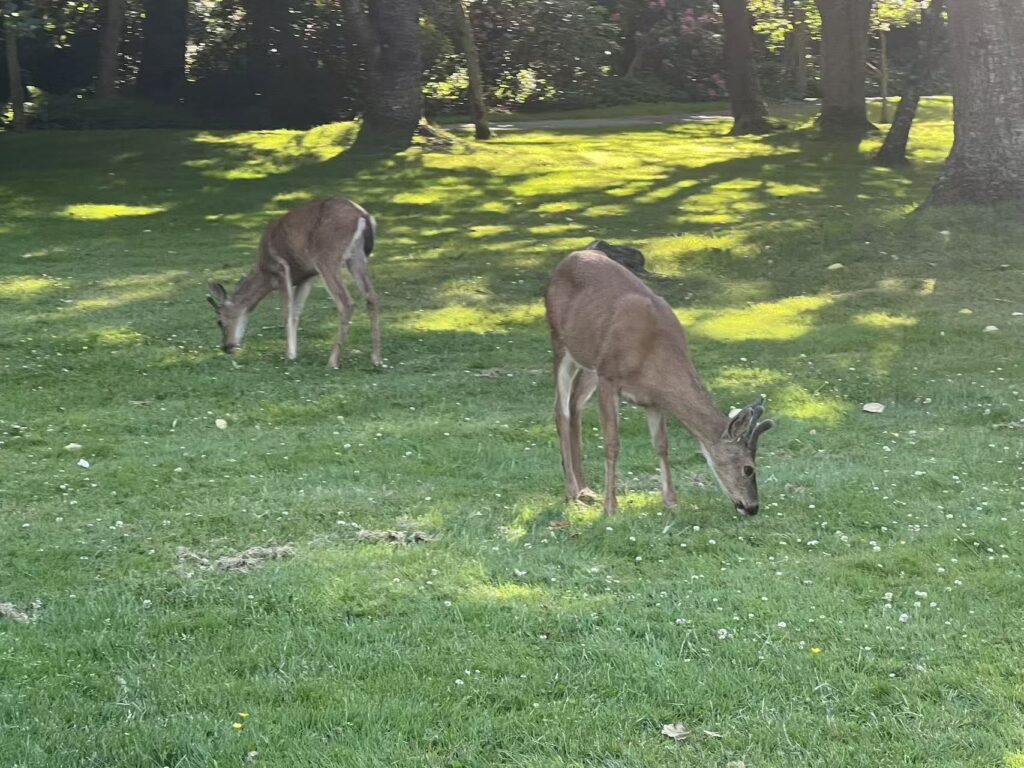
This aspect also ties into the modality principle because the audio helps make the story feel more real. Compared to verbose written descriptions, audio is one of the most effective ways to give people an intuitive sense of the story. My goal is to help listeners imagine that they are right there with me.
Stop 3: Academic Space — Learning Inside Campus
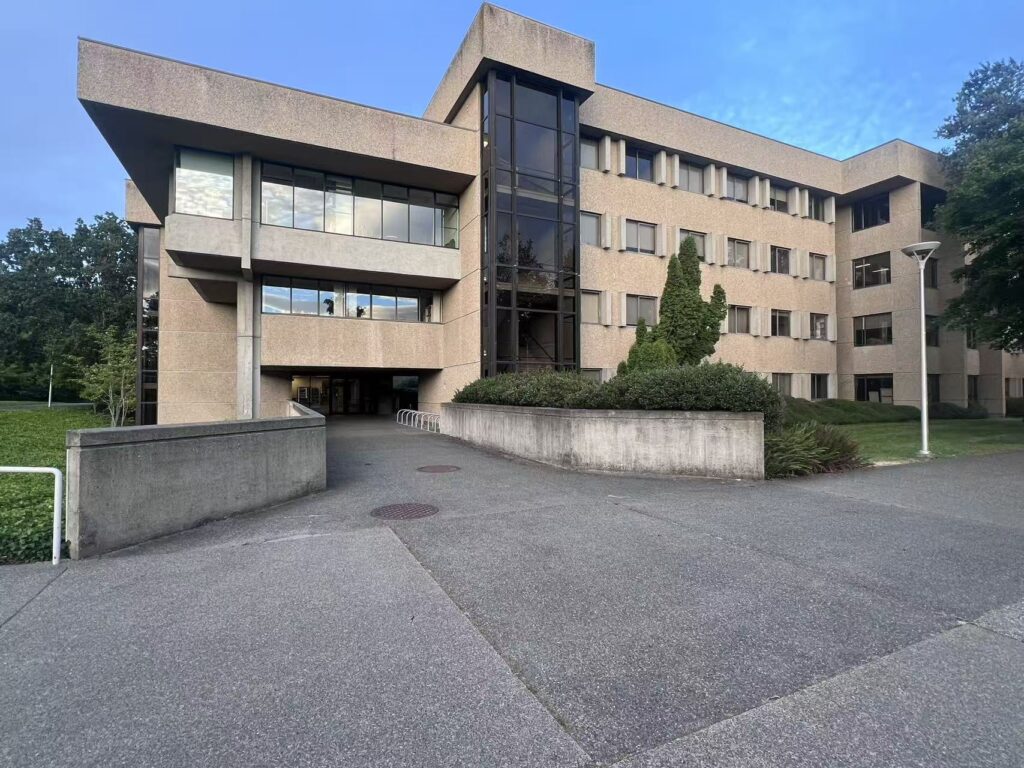
Wind(link)
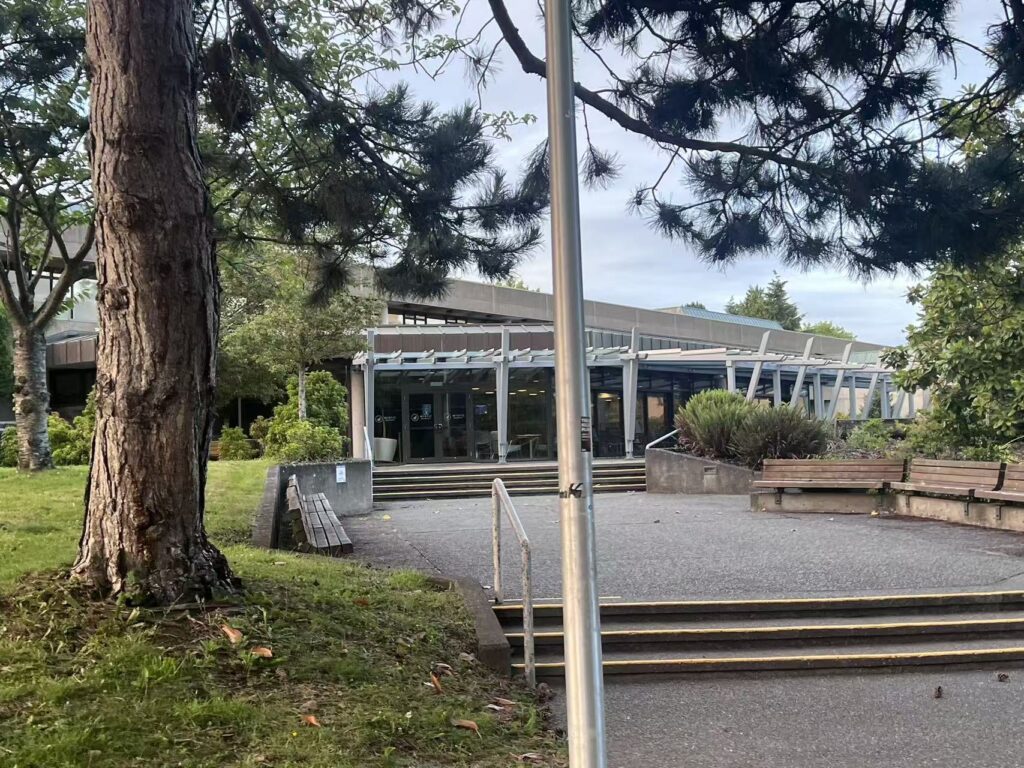
I walked through the garden and paths to the campus and entered the academic part of campus. This part is not as similar as Finerty Gardens. The garden appears to be moving more slowly, more open, and the academic buildings reflect more the idea of class, reading, assignments and study time.
I chose this stop since it highlights another aspect of UVic. It’s not just a place to stroll around and appreciate the ambience. It is a place as well where students spend a lot of time learning and working. Placing this section at the end of the nature section helped me convey the transformation from an open space to a more concentrated area for studying.
This section also relates to the principle of segmentation. I didn’t want to see the whole campus at once, as that would be messy. The walk is broken up into segments, making it easier for the audience to follow. One stop represents one aspect of the campus, and this academic stop represents the more formal side of the campus life.
Stop 4: Student Life and Community
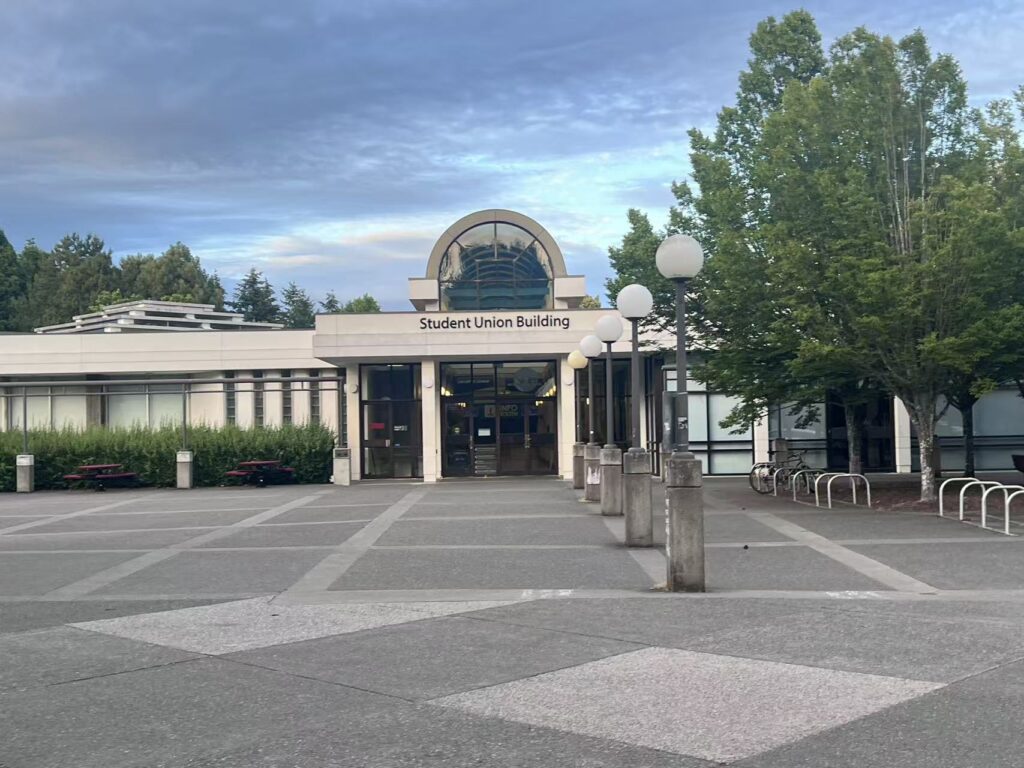
The last part of my walking story is about student life, and community. I selected the Student Union Building because it is the other side of UVic. This area is more tied in to student life as compared to the garden and academic buildings. Students are able to eat here, meet friends, attend events, access support or simply study between lessons.
The Student Union Building has been instrumental in helping me demonstrate the social aspect of life at UVic, in addition to the natural and academic aspects.
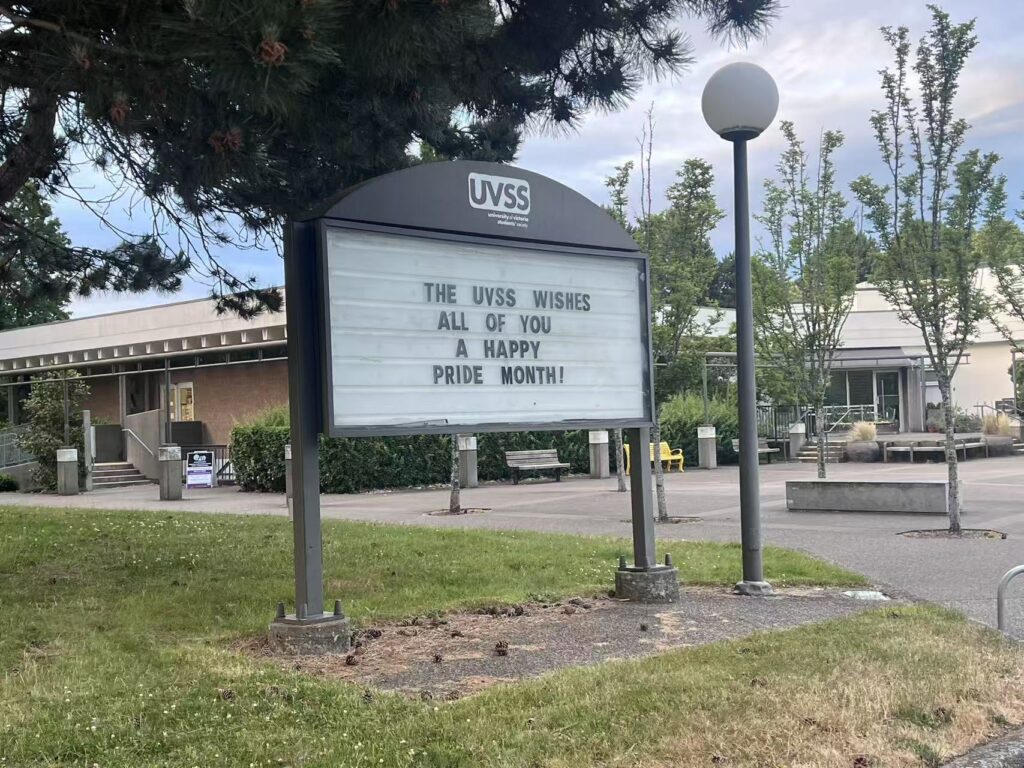
I included the UVSS logo here because it represents yet another aspect of the concept of “community.” It reflects how students’ sense of identity, support networks, and inclusivity are all present within the campus environment. This ties into the principle of “spatial continuity,” as people can immediately understand the image and the meaning it conveys.
Media Integration
In this final story, I used a variety of media formats to give the audience the feeling of strolling through the campus. Each media format was chosen to enhance the experience, and each serves a distinct purpose.
My route, decisions, and reflections are all articulated through text. Without text, viewers would only see images and might not understand the significance of each stop along the way to the story. The images are used to showcase the physical spaces of the entire university, such as Finati Garden, walking paths, academic buildings, and the Student Union Building. These images illustrate the transition of the spaces from natural surroundings to academic and community spaces during the walk.
Furthermore, I used a route map to organize the narrative structure. This map outlines my recommended walking route to help those interested in exploring UVic avoid getting lost. To create atmosphere and a sense of movement, I incorporated audio elements. The audience can not only learn about the content through reading but also personally experience the sensation of the walk or listen to the sounds they might hear outdoors, as if they were actually there.
The combination of these media demonstrates that the University of Victoria is not merely a collection of buildings, but a learning environment shaped by nature, movement, learning spaces, and the student community.
Connection to Mayer’s Principles
When selecting media materials, I particularly agree with a statement from Mayer’s Principles of Multimedia Learning. Multimedia design is not merely about incorporating images, text, or audio into The Cambridge Handbook of Multimedia Learning; rather, it is about helping the audience understand the information and reducing unnecessary confusion (Mayer & Fiorella, 2021). I tried to apply this concept while compiling my “Campus Stroll” stories.
Firstly, I used the principle of coherence. While walking around campus, I spent a great deal of time observing each location and took numerous photos of buildings, signs, paths, trees, and open spaces; however, some photos were discarded because they needed to be retaken, lacked sufficient detail, or contributed little to the story. I ultimately selected images that represented various aspects of the campus: Finati Garden, walking paths, the campus’s natural landscape, academic spaces, and the Student Union building. In line with the principle of coherence, I avoided using material that might distract the audience’s attention.
Secondly, I applied the “Signal Principle.” By incorporating maps, chapter headings, and brief captions, I showed the audience where to go and what to look at. The map provided direction even before the story began, and the headings were very clear. This allowed the audience to follow the narrative’s progression, rather than simply flipping through photos of the campus.
Thirdly, I applied the principle of segmentation. I divided this walk into several segments rather than presenting the entire campus at once. Viewers will start at Finati Garden and proceed sequentially through the nature trails, academic spaces, and student life and community areas. This makes the story easier to follow, as each section focuses on a specific area of the campus. If all the content were presented together, viewers would feel as though they were simply reading a newspaper.
Fourthly, I applied the principle of spatial proximity. Images are placed near the relevant paragraphs or captions. For example, images of Finati Garden appear in the “Finati Garden” section, while images of the Student Union Building appear in the “Student Life” section. This makes it easier for readers to follow the route of this tour through my images.
Fifthly, I also applied the modality principle by incorporating audio. Footsteps, the sound of the wind, and birdsong offer another way to experience this stroll. The audio not only enhances the text’s descriptions of various sounds but also enriches the audience’s imaginative experience.
Furthermore, the route map serves as a preview. Before readers arrive at specific locations, the map gives them a general understanding of the route。
I believe Meyer’s principles are more than just “rules for making a page look prettier.” They helped me determine what should I add and cult and how to use different media. This has taught me how to use media in the right places to present the story in its entirety.
Process and Challenges
The entire process and the challenges it presented were not particularly easy for me. My initial idea was to photograph a single building. At that time, I didn’t fully understand the Mayer principles. I realized the limitations were quite significant, so I shifted my perspective to include the entire campus and its surrounding environment. This is also related to the design process in the course. My story follows the process of “understanding, planning, experimenting, and reflecting.” At the beginning, I had to figure out why the idea of “just one building” was too limiting. Then, I planned a walking route, experimented with different photos and audio clips, and reflected on which media choices would make the story clearer.
From my personal perspective, I believe people’s mood is influenced by the environment. I chose this location because it is very quiet, which helps prevent viewers from being overwhelmed by too much information at once. I opted for a gradual approach, starting with the garden, moving into the school, and then on to the campus buildings. I wanted viewers to sense the changes in foot traffic and experience the authenticity of a stroll, rather than simply viewing static landscape photographs.
Another challenge was selecting the photos. My plan was to document both the signage and photographs of each representative building. However, some photos were duplicates, and others weren’t strongly connected to the overall narrative, so I retained only the most representative ones.
The greatest challenge came from reading the textbook, which disrupted my original line of thinking. While utilizing multiple media formats, I had to ensure the story remained free of superfluous content. I needed to make sure every piece of text, image, and audio established a connection with the audience and served a meaningful purpose.
Accessibility and Privacy
When I creating this story, I gave careful consideration to accessibility and privacy. I took factors such as weather and foot traffic into account. I added descriptions to each image, and I made a point of respecting privacy while gathering material. I took numerous photos of campus spaces, trails, buildings, and natural scenery, and I did my best to avoid close-ups of other students. When recording audio, I did not include any clear audio of private conversations.
Conclusion
In conclusion, this multimedia story has given me a new perspective on UVic. Before starting this project, my knowledge of the campus was very limited; aside from classes, academic buildings, and assignments, I had almost no impression of it. As I walked from Finerty Gardens onto the main campus, I realized that the University of Victoria is more than just the main campus—it also includes natural areas, walking paths, student activity spaces, and places for people to relax and unwind between classes.
I also realized that every media element must serve a purpose. My story included images of each iconic building, a map to guide the walking route, audio recordings to set the mood, and written descriptions. I applied Mayer’s principles to make more informed decisions about what content to keep, what to omit, and how to guide the audience through the story.
Overall, through this project, I successfully transformed a simple campus stroll into a vivid multimedia story. It also made me realize how effectively media can drive a story forward when its purpose is clearly defined.
References
Bates, A. W. (2019). Teaching in a Digital Age. BCcampus Open Publishing.
Mayer, R. E. (Ed.). (2021). The Cambridge Handbook of Multimedia Learning (3rd ed.). Cambridge University Press.
Google Maps. (2026). Route map of the University of Victoria campus.
All campus photos and audio were created by me.